
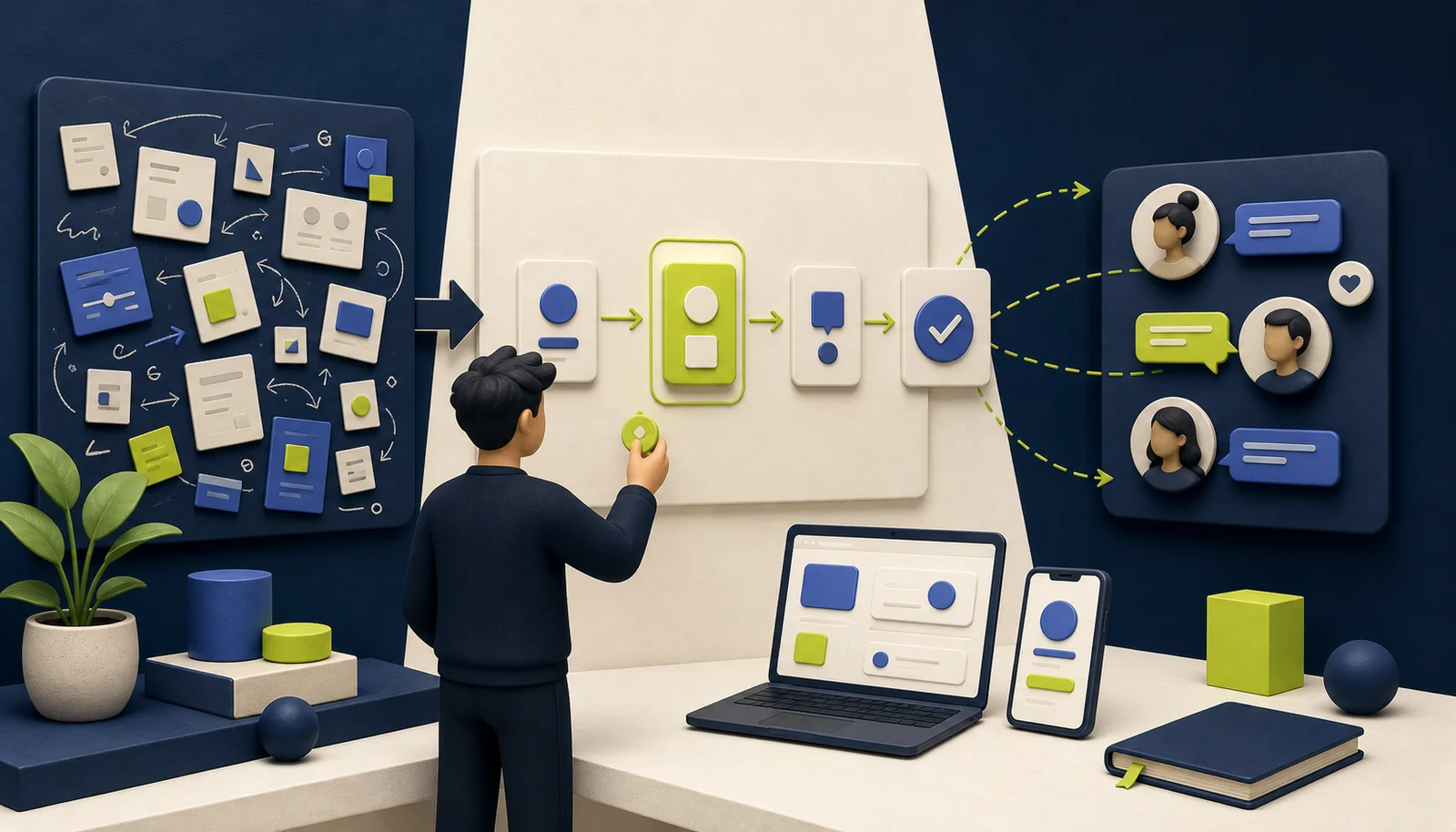
What is an MVP?
A minimum viable product is the smallest complete product that lets real users solve one useful problem.
Minimum means the scope is tight. Viable means the product still works well enough to deliver value.
An MVP is not a broken demo. It is also not a full product with a few screens removed.
Y Combinator describes an MVP as a real product rather than a prototype. Users should understand its purpose without the founder explaining every step.
Silicon Valley Product Group offers another useful test: the product must be valuable, usable, and feasible.
That gives founders a simple rule: build less, but make the important path complete.
Start with the question your MVP must answer
A weak MVP brief starts with features:
- We need a dashboard.
- We need AI chat.
- We need five user roles.
- We need reports and notifications.
A strong brief starts with a risky belief:
- Will restaurant owners pay to reduce missed bookings?
- Will remote design teams review work inside one shared flow?
- Will new investors complete a simple weekly learning plan?
Your MVP exists to test the belief. Features only matter when they help run that test.
Use this one-sentence MVP test
Write this sentence before you plan the product:
We believe [specific user] will use [one core action] to solve [specific problem] and we will know it works when [observable behavior] happens.
A vague sentence creates a vague product. Saying people will like the app does not guide the build.
A useful test is specific: five invited shop owners create and send a restock order without help.
Choose one complete user journey
A feature is one part of a product. A journey is the full path a user follows to get value.
For a simple booking product, the first journey might be:
- The business creates one service.
- The customer chooses a time.
- The business confirms the booking.
- Both people receive the information they need.
That journey can be useful without team permissions, advanced reports, loyalty points, custom themes, or ten integrations.
The best first journey is not always the easiest feature to code. It is the shortest path that tests whether the product creates value.
How to control MVP scope
Most MVPs grow too large through small decisions. Every extra idea sounds harmless. Together, they turn a focused test into a long product build.
Put every feature into one of three groups:
| Group | Question | Action |
|---|---|---|
| Needed now | Does the core journey fail without it? | Build it. |
| Learn first | Do we need real user behavior before deciding? | Wait for evidence. |
| Useful later | Does it improve a product that is already working? | Place it in the later backlog. |
When people disagree, return to the risky belief. If a feature does not help test it or complete the core journey, it does not belong in the first release.
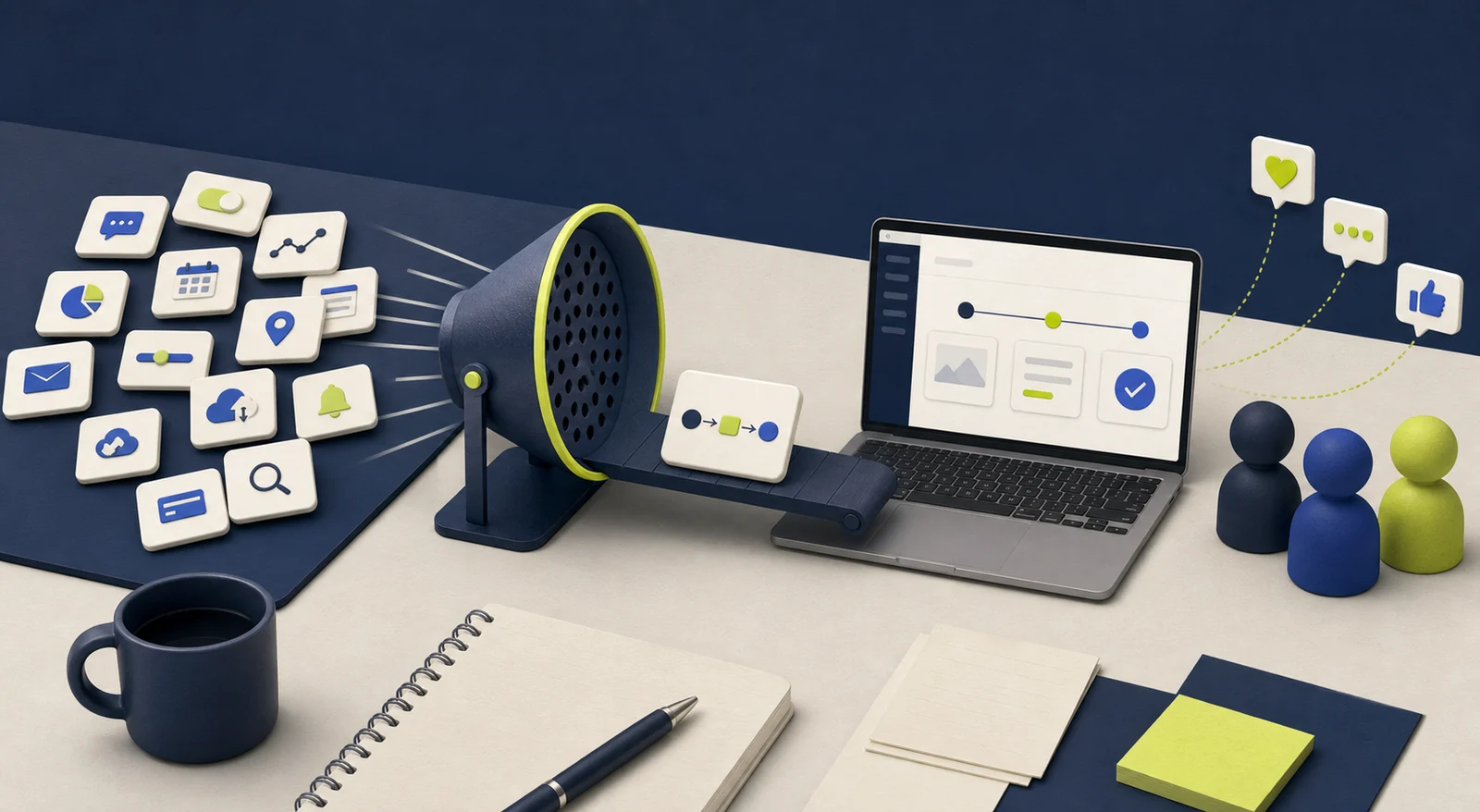
A six-step MVP development process for startup founders
1. Name the riskiest assumption
Ask what must be true for the business to work. It might be demand, trust, repeated use, willingness to pay, or the ability to complete a difficult task.
Test the assumption that could change the whole direction first. Do not spend the early budget proving something you already know.
2. Pick one narrow user group
The phrase small businesses is too broad. A ten-person dental clinic and a local construction company work in very different ways.
Choose a group you can reach and understand. A narrow user group makes the language, workflow, onboarding, and feedback clearer.
3. Map the shortest path to value
Write down every step between the user arriving and the user getting the promised result. Remove steps that do not change the outcome. Combine steps where possible.
Do not remove the part that creates trust or clarity. A payment product without a clear confirmation may be small, but it is not viable.
4. Decide what you will measure
Choose the signal before development begins. Useful signals may include:
- finishing the core action;
- returning to use it again;
- inviting another person;
- paying or requesting a paid plan;
- completing the journey without founder support.
Page views and sign-ups can be helpful, but they do not prove that the product solved the problem. Measure the behavior closest to delivered value.
5. Build the smallest complete release
Use proven tools for parts that are not your special advantage. Authentication, payments, email delivery, hosting, and databases often have reliable managed options.
Spend custom effort on the part that makes the product useful or different. This keeps the first build focused without making it careless.
6. Launch to real users and watch
An MVP cannot produce evidence while it stays private. Give it to a small group of target users. Watch where they stop, what they misunderstand, and what they try to do next.
Ask about the problem and the experience, but give more weight to behavior. People may politely say they like a product. Returning and using it again is a stronger signal.
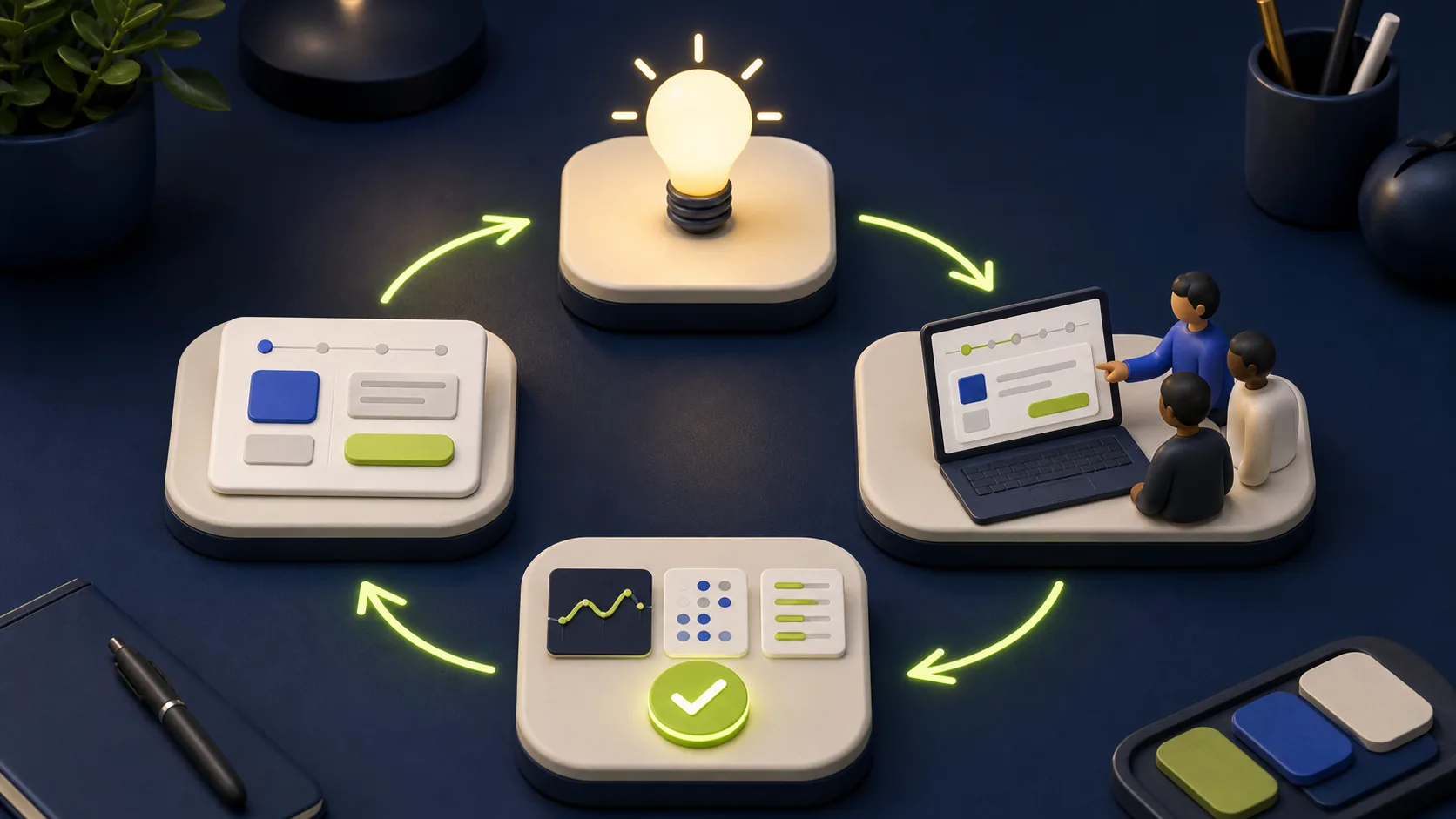
What should be ready before MVP development starts?
A focused build still needs clear decisions before development begins. Starting with an unclear brief usually moves the same arguments into the build itself.
Prepare these six things first:
- a narrow user group you can reach;
- one problem worth solving now;
- the shortest complete journey;
- the behavior that will show useful value;
- the trust, privacy, and safety work the journey needs;
- a written list of features that are outside the first release.
Choose one person who can make the final scope decision. A team can discuss options, but the first release cannot stay focused when every disagreement adds another feature.
Make access to users part of the plan. A finished product cannot create useful evidence if the team does not know who will test it or how those people will be reached.
Also decide what result would make you continue, change direction, or stop. This keeps the team from changing the goal after seeing an uncomfortable result.
How to read MVP evidence without fooling yourself
Founders often hear positive words and treat them as proof. A user may say they like the product. That is encouraging but it does not prove the product solved the problem.
Look for behavior connected to value. Did the user finish the core journey? Did they return? Did they ask to keep using it? Did they complete the task without founder support?
Watch where people stop or create their own workaround. Confusion can point to a weak interface, but it can also show that the promised result is not important enough.
Keep a simple decision record after each test:
- what we believed;
- what users actually did;
- what surprised us;
- what we will change;
- what we will not build yet.
Do not hide a weak core journey behind more traffic. Sending more people into the same confusion produces a larger number, not better evidence.
Use interviews to understand why something happened. Use product behavior to confirm what happened. Both matter, but neither should be forced to support the original idea.
How long should MVP development take?
There is no honest timeline without a defined scope.
A landing-page test or manual concierge service can be prepared quickly. A multi-role software product with payments, private data, or regulated workflows needs more care.
The better question is: what is the fastest safe way to test the risky assumption?
Before choosing a date, confirm:
- one target user;
- one core journey;
- the required trust and safety work;
- the measurement plan;
- the features that are explicitly out of scope.
Once those decisions are clear, the timeline becomes much easier to estimate.
Should you build in-house or use an MVP partner?
Build in-house when product development is a core strength, the team is available, and the first test can be built without slowing customer research.
Use a partner when speed, product design, or technical execution is blocking the test. A useful partner should help you remove features, not sell you a larger build.
At Tuvoc, we build first versions that are designed to produce evidence fast.
Ask any potential partner these questions:
- What assumption will this first version test?
- Which features would you remove?
- How will we measure the core journey?
- What can use managed tools instead of custom code?
- What happens when user behavior proves us wrong?
If the answers focus only on technology and delivery dates, the project may produce software without producing useful evidence.
Yash Kaku Designs provides MVP development services in the USA for founders who need product design and implementation to stay inside one focused workflow.
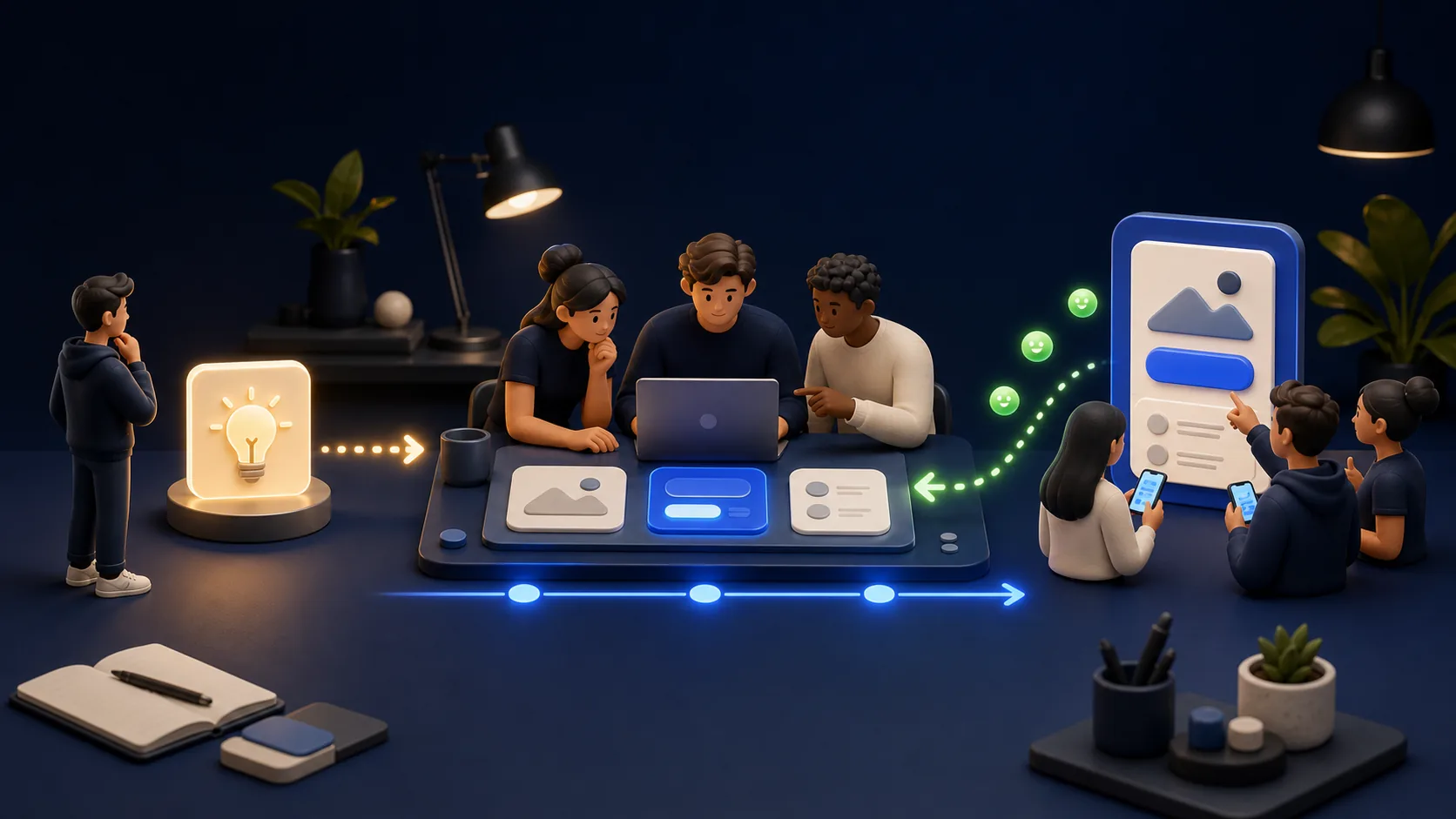
Common MVP mistakes
Building a small version of every future feature
This creates a wide but weak product. Build one complete journey instead.
Calling a prototype an MVP
A prototype can test an interface or technical idea. An MVP must deliver real value to a real user.
Waiting for perfect design
The first release does not need decorative polish. It does need clear navigation, readable content, useful feedback, and enough trust for someone to complete the journey.
Measuring attention instead of value
Traffic, likes, and sign-ups can hide a weak product. Track whether users reach the useful result and return.
Adding features instead of fixing the core journey
When users struggle, teams often add more. First remove confusion, reduce steps, and improve the central action.
What should happen after the MVP launches?
Use the evidence to make one of four decisions. This follows the build, measure and improve principle described in the MVP guide from Atlassian:
- Continue: the core behavior is working, so improve the journey.
- Change: the problem is real, but the solution or user group is wrong.
- Expand: repeated use is clear, so add the next feature supported by evidence.
- Stop: the assumption did not hold, and another direction deserves the budget.
Stopping a weak idea early is not a failed MVP. It is useful learning purchased at a controlled cost.
Frequently asked questions
What is considered a minimum viable product?
A minimum viable product is the smallest complete product that lets a real user solve one useful problem and lets the team collect evidence.
It must be usable without constant explanation. A clickable mockup may be a helpful prototype, but it becomes an MVP only when it delivers real value in a real setting.
What is MVP with an example?
Imagine a founder testing a service that helps restaurants fill cancelled tables. The MVP may let one restaurant post an opening and nearby customers claim it.
It does not need loyalty points, complex reporting, or many locations yet. The test is whether restaurants post openings and customers claim them.
Our upcoming minimum viable product examples guide will break down more real MVP types and the assumption behind each one.
What is MVP vs MMP vs MLP?
An MVP is built to test a risky assumption with the smallest complete product. A minimum marketable product, or MMP, is ready for a wider market and a clear sales offer.
A minimum lovable product, or MLP, places more weight on an experience users enjoy. The right stage depends on whether you are learning, selling broadly, or competing on experience.
How to build an MVP for your startup?
Start with one risky assumption and one narrow user group. Map the shortest complete journey that solves their problem.
Choose the behavior that will prove value. Remove features that do not support the test, build with proven tools, and launch to a small group of real users.
Use real behavior to choose the next step. Do not rely only on what users say.
Build less, but make the learning useful
Good MVP development is not a race to ship unfinished software. It is a disciplined way to turn uncertainty into evidence.
Choose one user. Solve one problem. Complete one journey. Measure one meaningful behavior. Let the result decide what comes next instead of the original feature list.