For one defined deliverable or asset family
Focused Project
Quoted after brief
Fixed-scope engagement
- Written scope and exclusions
- Agreed review rounds
- Defined formats and deadline
- Organized source-file handoff
Founder-led design support for decks, reports, collateral, campaigns, and repeatable marketing assets. One point of contact, a defined review process, and files your team can keep using.
Fixed price · reply in < 1 day

Graphic design services should remove production friction. A small team can know exactly what it wants to say and still lose weeks to scattered files, unclear ownership, repeated briefing, and assets that look unrelated once they appear together.
A sales deck, webinar graphic, brochure, and social campaign are treated as separate jobs. That creates repeated decisions, inconsistent layouts, and avoidable review time. A stronger system reuses hierarchy, typography, components, and approved visual patterns.
When the designer needs constant visual instruction, the client ends up managing spacing, hierarchy, and consistency instead of evaluating whether the asset communicates the right thing. Senior design support should reduce that management burden.
Event materials, proposals, campaign variations, and sales PDFs often arrive with the shortest deadlines. Without a usable system, the most visible business assets become the least consistent ones.
Poor naming, missing links, flattened exports, and unclear templates create dependency on the original designer. Delivery should leave the client with organized source files and a structure that another capable designer can understand.
Graphic design services apply a visual system across the materials a business uses to sell, explain, launch, report, and stay recognizable. The work can include presentations, reports, brochures, one-pagers, campaign sets, social templates, event assets, and production-ready collateral.
They do not automatically include brand strategy, copywriting, product UX, web development, or unlimited output. If the underlying identity needs to be created or repaired first, start with Brand Identity Design. If the work concerns product flows and interfaces, review UI/UX Design Services.
US market context: the SBA Office of Advocacy reported in February 2026 that the United States has 36,207,130 small businesses and 82.3% have no employees. The US Census Bureau reported 523,971 business applications for May 2026. These figures do not prove design causes business success. They explain why flexible specialist support is relevant to teams that are not ready to build a full internal department.
| Known deliverable Focused project | Continuing queue Recurring support | Remote model Offshore support | |
|---|---|---|---|
| Primary goal | Complete one defined piece of work | Keep regular sales and marketing work moving | Work directly with an India-based designer |
| What ships | A report, brochure, deck, template system, or campaign kit | Prioritized assets across an agreed monthly capacity | A scoped project or recurring support delivered remotely |
| How it works | Scope, review rounds, deadline, and formats are agreed before design starts | One queue, one decision owner, and finite capacity rather than an unlimited promise | Async communication, agreed overlap, clear ownership, and remote review |
| Typical timeline | Set by content volume and complexity | Ongoing, reviewed by month | Defined around the selected engagement |
| Afterwards | Files are handed over and the engagement can close | Continue, resize the scope, or pause with an organized handoff | Managed under the offshore-specific terms and workflow |
The six graphic design services categories below are grouped by business use. A useful scope names the content responsibility, formats, and handoff instead of hiding behind a long list of design nouns.
For investor conversations, sales calls, partnerships, webinars, and internal communication. The work can include story hierarchy, slide systems, tables, diagrams, chart styling, reusable master layouts, and final PDF preparation. Messaging and copy responsibilities are agreed before the design phase.
For information that must remain readable across many pages. The work focuses on grids, navigation, hierarchy, data presentation, tables, captions, recurring page types, and export requirements. Long documents are scoped by page count, content readiness, and the amount of chart or illustration work.
For outreach, events, sales follow-up, and service explanation. The goal is not to compress every business fact onto a page. It is to create a clear reading path, make the offer understandable, and leave the sales team with an asset that works without a designer present.
For a coordinated launch or time-bound marketing push. One approved direction is adapted across the required placements so the campaign reads as one system. Scope is based on the number of concepts, formats, size variations, and review rounds, not only the number of exported files.
For teams that publish repeatedly and need controlled flexibility. Templates define hierarchy and reusable patterns while leaving enough range for different content types. The objective is to reduce rebuild time without turning every post into the same layout.
For collateral that must survive real production constraints. The work can include bleeds, color mode, linked assets, packaging of files, output checks, and format adaptation. Printing, vendor management, specialist packaging engineering, and copy proofreading are separate responsibilities unless included in scope.
The graphic design services process is deliberately explicit about inputs and limits. A clear workflow protects quality, but it also tells the client what must be ready for the deadline to remain realistic.
We clarify the audience, business objective, final formats, content status, deadline, existing brand assets, legal or compliance requirements, and who owns approval. If the content is not ready or the identity cannot support the requested work, that risk is identified before quoting.
The proposal states what will be designed, what is excluded, the included review rounds, delivery formats, timeline, and price. For recurring support, it also defines how requests enter the queue and how competing priorities are resolved.
A representative page, key visual, or small asset family establishes the visual logic before every variation is produced. This reduces the cost of changing direction after dozens of files already exist.
Assets are produced against the approved direction. Feedback is collected through one decision owner and handled in the contracted review rounds. New deliverables, rewritten content, or a reversal of approved direction are treated as scope changes.
Approved assets are exported for their intended use and source files are organized for handoff after final payment. Third-party fonts, stock images, and licensed materials remain subject to their original license terms.
Graphic design services should fit the client's workflow rather than force a fashionable tool stack. Tools are selected by output requirements so feedback stays traceable and delivered files remain understandable.
For graphic design services, the discovery call reviews the asset list, content readiness, deadline, approvers, and current brand system. If the work is not a fit, you will get that answer directly.
Pricing for graphic design services depends on content volume, complexity, formats, urgency, review ownership, and whether the work is project-based or recurring. Yash Kaku Designs does not publish an invented flat rate for every brief. Every proposal states the scope and price before work starts.
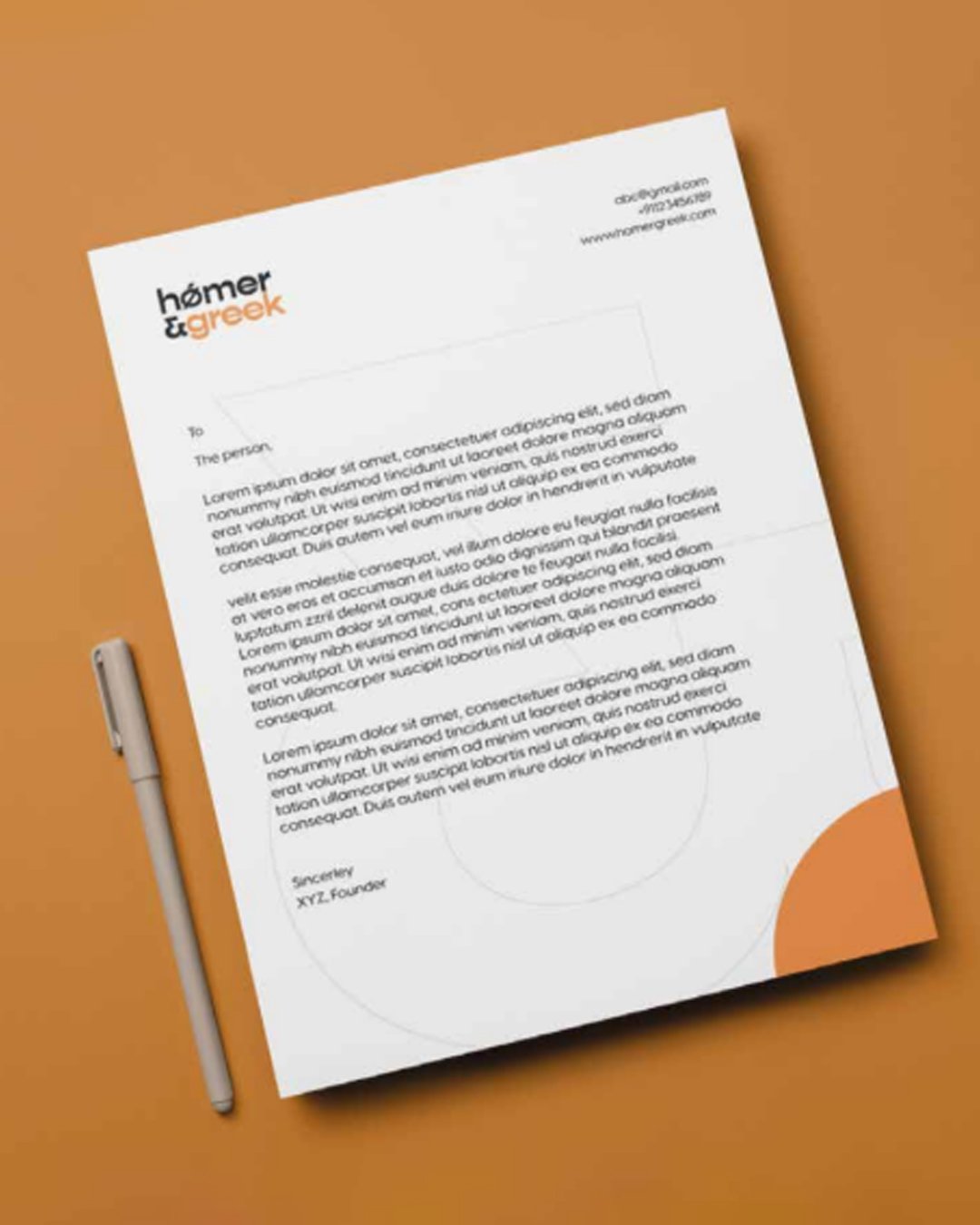
Proof for graphic design services should distinguish client work from employment history. Homer & Greek is a published client case study. CSRBOX and Group Bayport are employment-history references already disclosed on the About page, not direct Yash Kaku Designs client engagements.

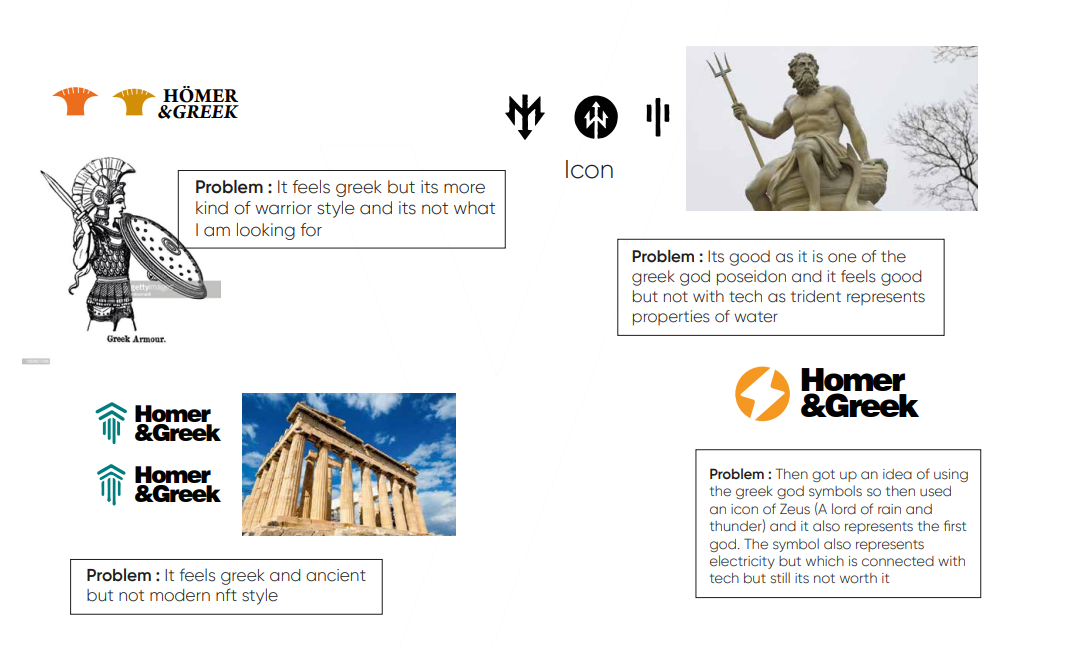
The agency needed a visual identity that could connect Greek philosophical references with the expectations of a modern B2B technology audience without becoming theatrical or generic.
The work moved through visible logo exploration, a selected wordmark and symbol, style-scape development, and business collateral including letterhead and business-card applications.
The published case documents the reasoning and the resulting system. It is evidence of how one visual direction can extend into practical business assets, not a claim about undocumented revenue or conversion results.
For graphic design services, a small studio is not a smaller version of a large agency. The value is direct senior involvement, fewer handoffs, and consistent judgment across the engagement. The trade-off is finite capacity. If you need many disciplines working in parallel, daily live collaboration, or a large account team, another model is more appropriate.

Yash provides graphic design services across brand systems, editorial layouts, presentation design, marketing collateral, UI/UX, and production-ready delivery. His published work history includes freelance, agency, corporate, editorial, and design-team contexts.
There is no sales-to-account-to-junior handoff. Context stays with the designer who scoped the work, which reduces repeated briefing and makes trade-offs easier to discuss directly.
Deliverables, exclusions, content responsibilities, review rounds, formats, and deadlines are written down. This protects both the client and the designer when the brief changes.
A polished preview is not enough. Layout systems, linked assets, export settings, naming, and source-file organization affect whether the work remains useful after delivery.
One designer cannot provide infinite simultaneous output. Recurring support is based on agreed capacity and prioritization, not an unlimited promise that hides a queue.
The fit for graphic design services depends less on industry labels and more on how the business buys, reviews, and repeatedly uses design.
You need credible investor, sales, launch, and marketing materials, but the volume does not justify a full-time senior hire.
Your team can own messaging and priorities, but needs one design system and one accountable production partner across formats.
Presentations, proposals, brochures, reports, and case-study PDFs carry a large part of the sales experience and need to remain consistent.
You have a fixed date and a mapped family of campaign, webinar, email, presentation, or print assets that need one visual direction.
The core brand already exists, but day-to-day materials do not use it consistently. Production support can extend the system without redesigning the identity.
This is not positioned as a staffed white-label pod. A narrowly scoped collaboration may fit, but high-volume parallel production requires a different operating model.
Not for every brief: choose a larger agency when you need strategy, copy, media, development, and many design streams in parallel. Choose a freelancer marketplace when price and speed on one narrow task matter more than continuity. Choose this studio when direct senior involvement and system consistency are the priorities.
When comparing graphic design services, ask about scope, capacity, revisions, and ownership. Those details determine whether an engagement feels reliable after the sales call.
Book a discovery callThe exact scope is agreed per engagement. Typical work includes presentations, reports, brochures, one-pagers, campaign assets, social template systems, email graphics, event materials, and production-ready collateral.
Brand strategy, naming, copywriting, product UX, web development, printing, and specialist packaging engineering are not assumed to be included. They are either scoped separately or referred to the relevant service.
Yes. Existing guidelines, templates, and source files are reviewed before production begins. The first task is to understand which rules are fixed, which assets are approved, and where the current system is incomplete.
If the identity cannot support the requested work, that is raised before repeated production begins. In that situation, Brand Identity Design may be the more appropriate first step.
Turnaround depends on content readiness, complexity, number of formats, current queue, and review speed. A format adaptation is not the same task as a new report, presentation system, or campaign direction.
The proposal or recurring-support agreement states the expected schedule. Yash Kaku Designs does not promise every request in 24 hours because that would make complex work and review requirements invisible.
The included review rounds are written into the proposal. Feedback should be consolidated through one client decision owner and tied to the agreed objective.
Correcting execution within the approved direction is a revision. Adding new deliverables, replacing approved content, or reversing the approved direction is a scope change and is estimated separately.
The contracted final exports and editable source files are transferred after final payment. Files are organized for handoff rather than delivered as an unexplained working folder.
Third-party fonts, stock imagery, mockups, plugins, or licensed assets remain subject to their original license terms. Those dependencies are identified during delivery.
No. Recurring support provides agreed capacity, prioritization, and continuity with the same designer. It does not mean infinite requests completed simultaneously.
One request or agreed batch moves through the active queue at a time unless the proposal states otherwise. That expectation is more honest and makes turnaround easier to manage.
Pricing is affected by content volume, page or slide count, number of concepts, format variations, illustration and chart requirements, urgency, source-file condition, review ownership, and the number of included rounds.
After the discovery call, a written proposal states the quote, scope, exclusions, timeline, payment terms, and delivery formats. The page does not publish a fabricated universal rate before those variables are known.
Choose a freelancer for a narrow task when you can manage the brief and quality control. Choose a subscription service for high request volume and predictable throughput. Choose a large agency when you need several disciplines and parallel production.
Choose Yash Kaku Designs when direct senior involvement, continuity across formats, and fewer handoffs matter more than large-team capacity.
The call covers the business objective, deliverables, content readiness, deadline, current brand system, approvers, and budget context. You receive a direct fit assessment.
When there is a fit, the next step is a written proposal. It defines what will be produced, what is excluded, the review rounds, timeline, delivery formats, and price before work begins.
If you need graphic design services, bring the deliverables, deadline, current brand files, and the part of the process that keeps breaking. The first call is a fit and scope discussion, not a commitment.