Best for one core workflow
Validate
Custom quote
2-4 weeks engagement
- Product scope and feature cut-list
- Figma UX and UI for the core flow
- Working MVP for one launch-critical workflow
- Deployment and code handover
Remote MVP development services in USA for founders who need a launchable first version, not a throwaway prototype. Yash Kaku Designs helps you scope the product, design the core flow, build the app, launch on a modern stack, and hand over the code so your team can keep moving.
Fixed price · reply in < 1 day

Most MVPs do not fail because the idea was weak. They fail because the team builds too much, tests too late, or ships a product that does not feel credible enough for real customers. A good MVP development company protects scope, speed, and trust at the same time.
Founders often try to ship the whole roadmap in version one. That turns a validation sprint into a full software program before the riskiest assumption has been tested.
A working app still loses trust if onboarding, hierarchy, empty states, and visual design feel unfinished. Early users and investors judge product quality before they understand the roadmap.
When strategy, UI, and engineering live with separate vendors, the approved product often changes during handoff. Small compromises add up fast.
An MVP should help you collect validated learning with the least necessary effort. If the first release takes months and includes untested features, feedback arrives after too much money has already been spent.
An MVP is the smallest useful version of a product that lets a team learn from real customers. Eric Ries describes the MVP as a way to collect the maximum amount of validated learning with the least effort. That does not mean shipping a low-quality product. It means shipping the right first product.
Yash Kaku Designs works as a design-led MVP development agency for US founders who need a clear scope, polished UX, production-minded code, and clean handover. The engagement combines product strategy, UI/UX design, MVP software development services, and launch support in one focused sprint.
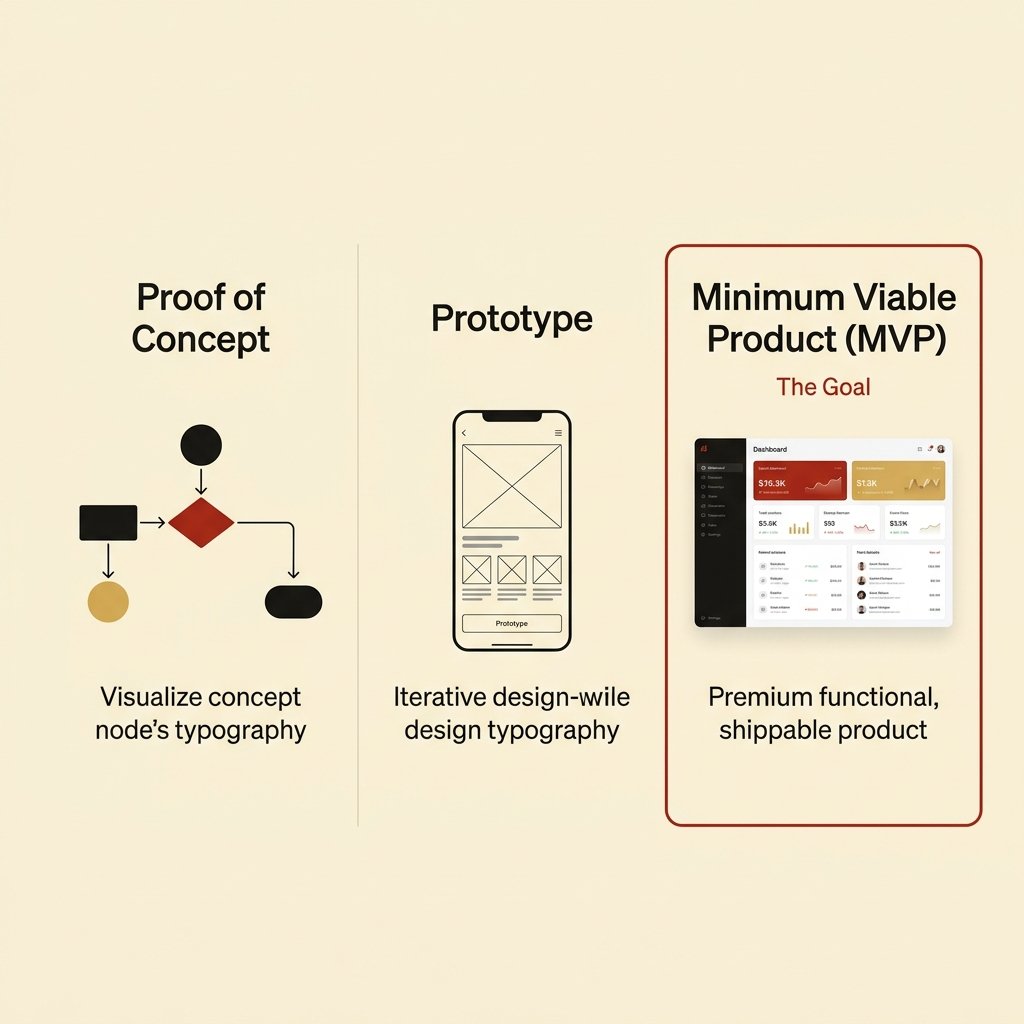
| Bespoke MVP Development Services MVP build | Design validation Prototype | Technical validation Proof of concept | |
|---|---|---|---|
| Primary goal | Validate the riskiest product assumption with real users | Test flow, messaging, and interface direction before code | Test whether a technical integration or workflow can work |
| What ships | A working first version with the core workflow live | Clickable Figma screens with realistic states | Small technical experiment or integration spike |
| How it works | Next.js, Supabase, Stripe, analytics, and handover docs when required | No production code | Experimental code, not customer-ready software |
| Typical timeline | 2-6 weeks depending on scope | 1-2 weeks | 3-7 days |
| Afterwards | Launch, measure, learn, and decide the next build cycle | Use for interviews, investor review, or scope decisions | Use the learning to scope the MVP build |
When the sprint ends, you should not be left with loose mockups or a codebase only the original builder understands. The deliverables are designed for launch, review, and future handover.
We define the core workflow, the feature boundary, the assumptions being tested, and the items that should wait. This keeps the MVP honest.
You get polished product screens, reusable components, responsive states, and clear interaction logic before development starts.
We build the live product around the approved scope, with auth, database, payments, and analytics added only where they support the first release.
You receive repository access, deployment ownership, setup notes, and walkthrough guidance so your team or future engineer can continue the product.
The process is built to remove ambiguity. Every stage creates a decision or asset that moves the product closer to launch.
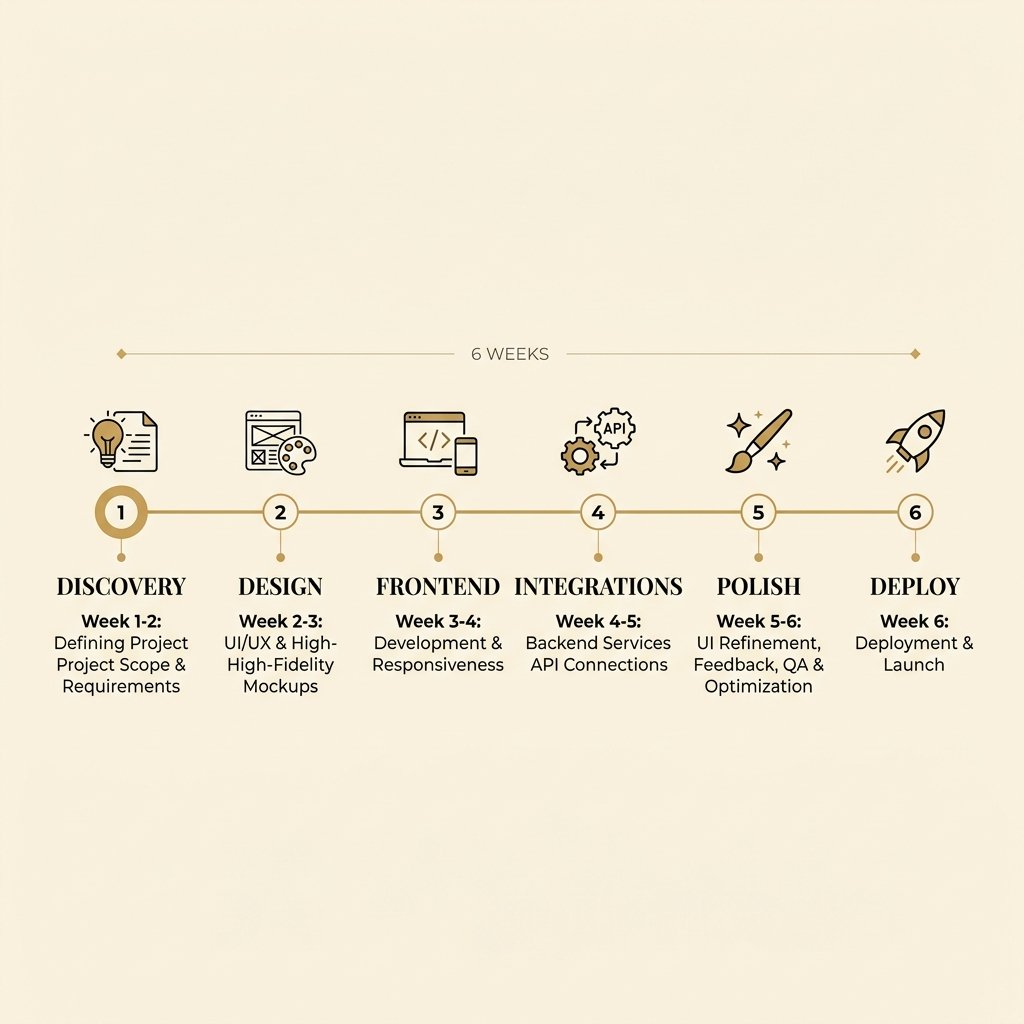
We clarify the user, the promise, the core workflow, the riskiest assumption, and the first release boundary.
We map the flow, design the key screens, define states, and turn the product into something stakeholders can review before code starts.
We develop the approved flows, connect the database, configure auth, add core integrations, and review working builds weekly.
We test the important states, prepare production deployment, connect analytics, document the setup, and hand over ownership.
The stack should help the MVP launch quickly without creating a fragile product. We use tools that support performance, security, handover, and future iteration.
Send the product idea, current notes, or rough screens. We will identify the likely MVP boundary, hidden risks, and a practical sprint path before writing code.
Pricing depends on scope, not vague hourly estimates. We define the workflow, integrations, product states, and handover needs before the build starts.
The best MVPs give founders evidence: where users get stuck, which promise converts, which feature matters, and what should be cut before the next sprint.
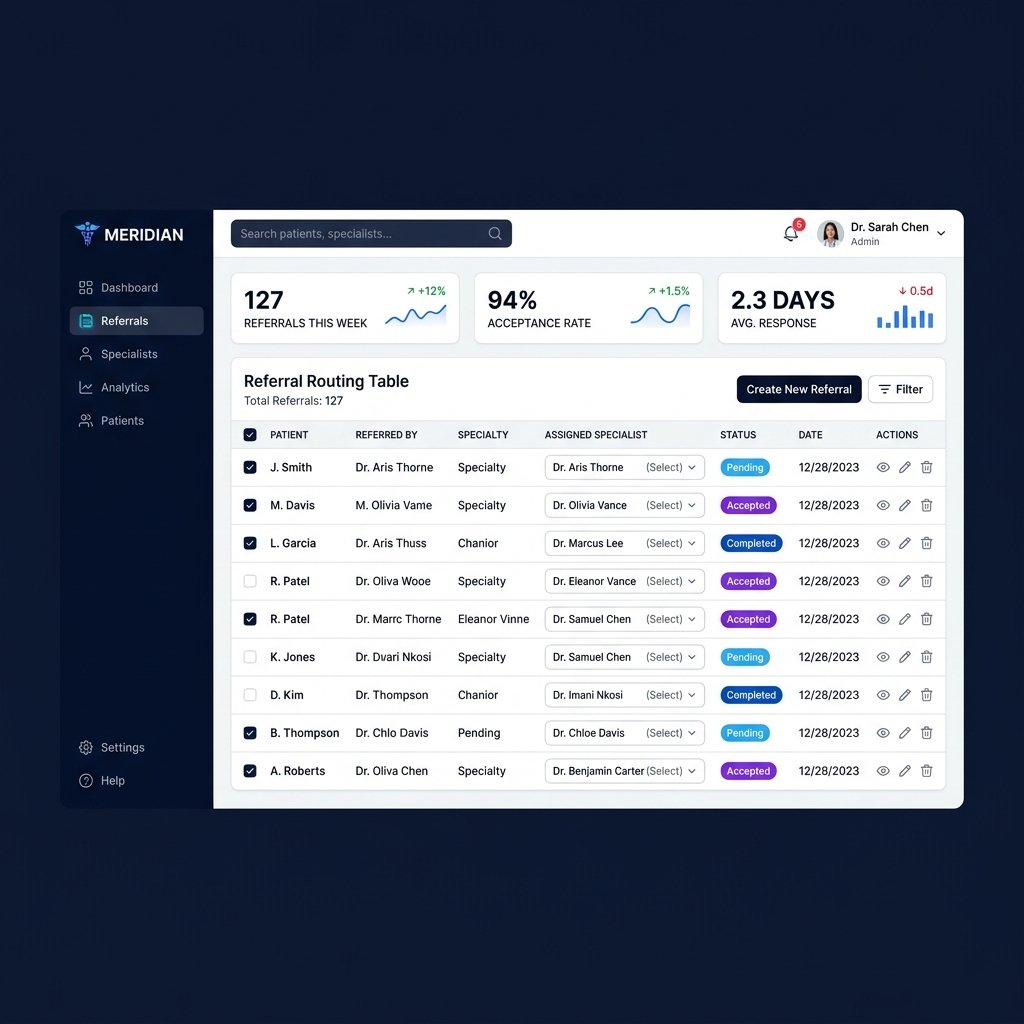
A solo founder was routing specialist referrals through email threads and a shared inbox. The process broke every time a new clinic joined and referrals started slipping through.
We scoped the product to one loop: a GP sends a referral, the specialist accepts or redirects, the patient gets notified. Auth, role logic, and a simple audit trail. Nothing else.
Live in five weeks. The first clinic network processed 127 referrals in week one without a single missed handoff. The founder used that traction data to close their seed round.
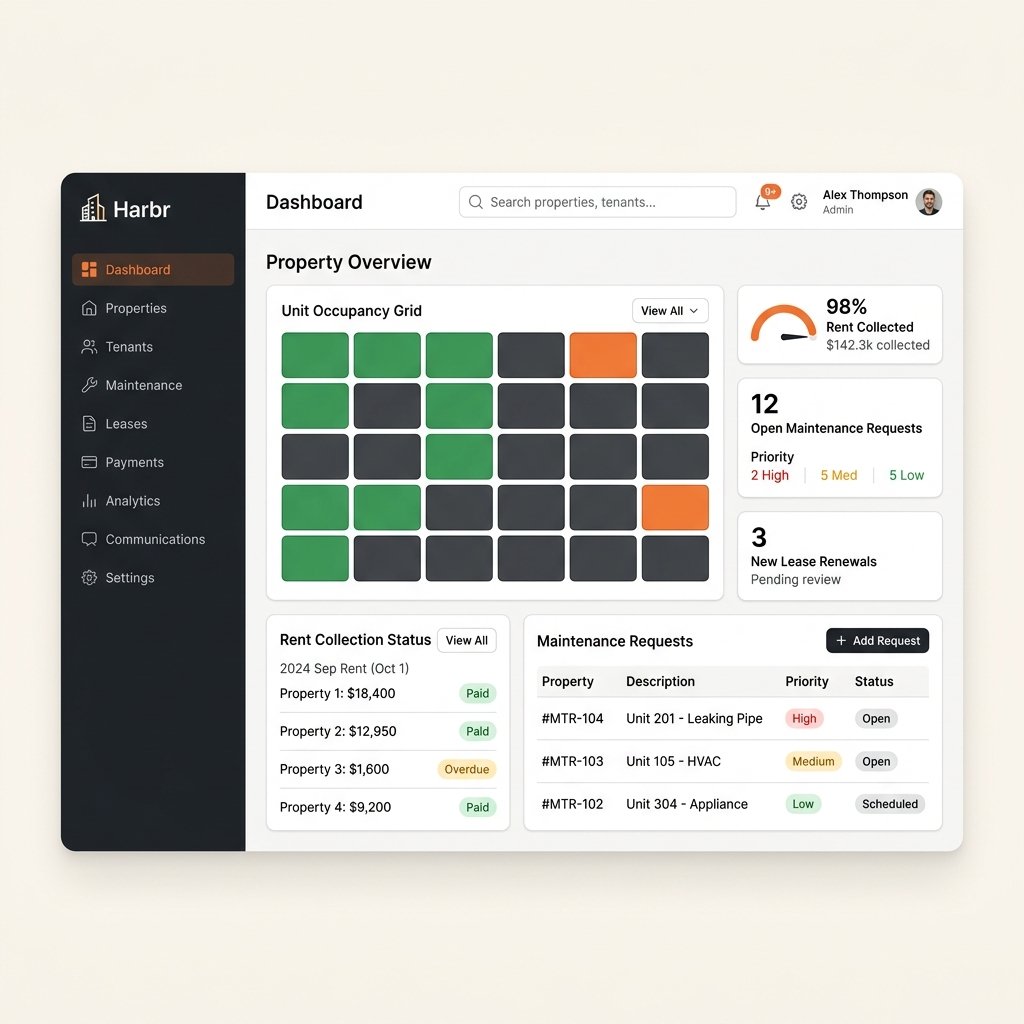
Two co-founders had a deck investors liked but could not feel. Every development quote came back between $90k and $120k for a feature list that was three products wide.
We cut the scope to one workflow that proved the business: a tenant submits a maintenance request, the landlord reviews and assigns, the tenant sees the update. Real roles, live data, no placeholders.
The working product replaced the deck. Harbr closed a $2.1M seed round six weeks after the MVP launched with three paying property managers already on the platform.
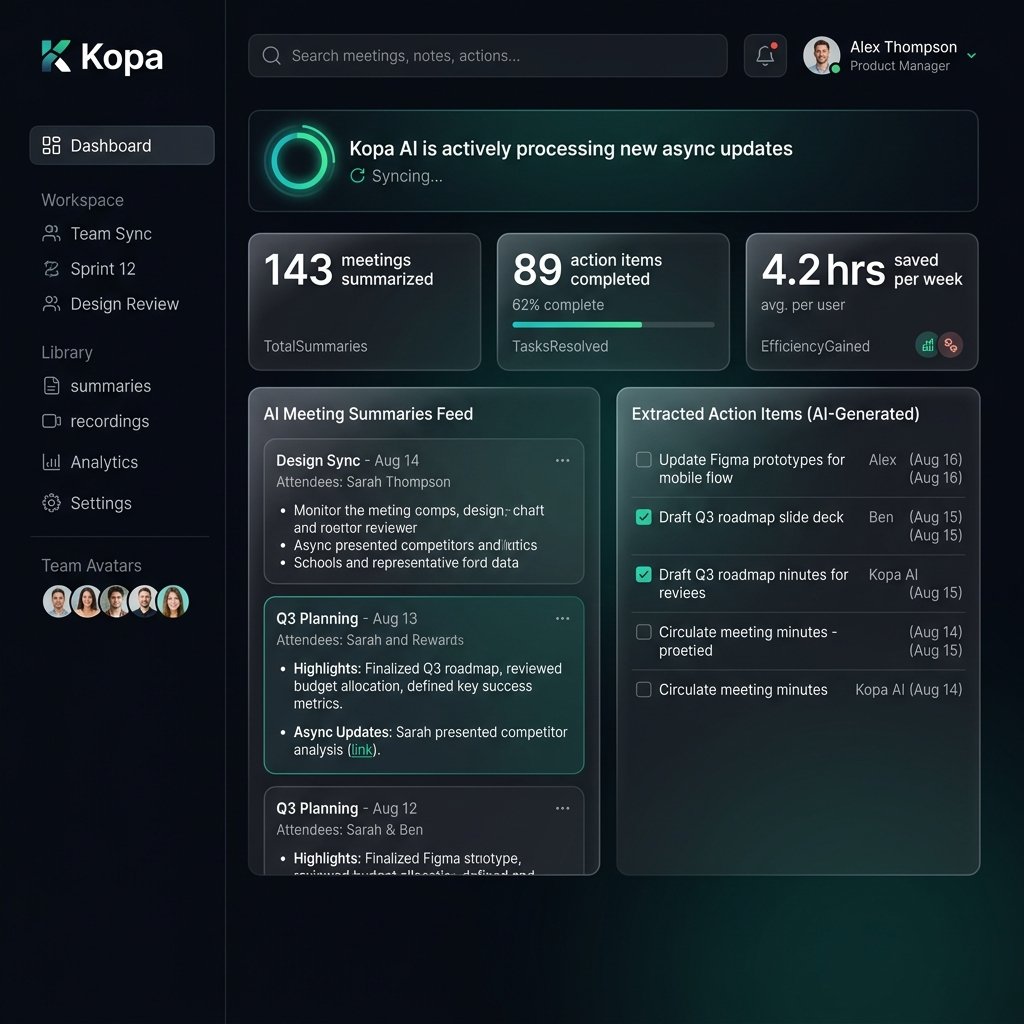
A founder had a sharp thesis: async teams waste more time on meeting catch-up than the meetings themselves. But there was no proof that anyone would pay for the fix.
We built the smallest thing that could demonstrate the insight: paste a transcript, get a structured AI summary with owners and deadlines, share it as a link. No workspace setup required at launch.
The launch thread did the work. Kopa hit 18k waitlist signups in the first month with no paid acquisition. The founder scoped the full product using real user feedback from day one.
Founders usually choose between a dev shop that ships features without product judgment, or a design studio that creates polished screens without owning the build. Yash Kaku Designs combines product strategy, UI/UX design, and development so the approved scope, designed experience, and shipped MVP stay aligned.

Yash leads product strategy, interface design, and build direction across each engagement. That gives founders one accountable partner from scope through launch.
The first value is not code. It is deciding what should be built now, what should wait, and what the MVP must prove.
The MVP needs trust, hierarchy, onboarding clarity, and usable product states, not only a working database.
The stack, repository, deployment, and handover are planned so another technical partner can continue the product without starting over.
The strongest fit is a product where trust, speed, and clarity matter more than a bloated feature list.
Fintech MVPs need clear onboarding, trustworthy dashboards, permissions, billing or transaction flows, and strong data-access thinking from the start.
SaaS MVPs need the core product loop, account setup, role logic, subscription paths, admin views, and analytics that help founders learn from usage.
AI MVPs need more than model output. They need prompt flow, review states, usage limits, fallback handling, and a UI that makes the product feel reliable.
This is not a fit if you want a large enterprise roadmap, a feature-by-feature clone, or an open-ended build with no launch boundary. It is a fit when the goal is to validate quickly, launch cleanly, and learn from real users.
These are the questions founders usually ask before hiring an MVP development agency or custom MVP development company.
Book a consultationOur MVP development services in USA cover product scope, feature prioritization, UX and UI design, development, deployment, analytics setup, and handover. The exact stack and integrations depend on the product, but common builds use Next.js, Supabase, Stripe, Vercel, and analytics tools. The goal is a credible first release that helps you learn from real users, not a throwaway demo.
Many agencies separate strategy, design, and development across different teams. Yash Kaku Designs keeps product thinking, interface design, and build decisions close together. That reduces handoff loss and keeps the shipped MVP closer to the approved scope.
Yes, when the first release has a focused validation scope. Fintech MVPs need extra care around onboarding, permissions, data visibility, payment flows, and user trust. We do not position an MVP as a replacement for legal, compliance, or security review, but we design and build the product so those concerns are visible early.
Yes. If the MVP needs a marketing site, waitlist, product landing page, or demo page, we can build that alongside the product so the story, visual system, and conversion path stay consistent.
Yes. The engagement is built around handover. You receive repository access, deployment ownership, setup notes, and enough context for your next engineer or internal team to continue.
Send the product idea, current notes, rough screens, or problem statement. We will reply with the likely MVP boundary, risks we see early, and the fastest path to a launchable first version.